Drain Field Service in Conroe, TX
Drain field service in Conroe, TX. We diagnose soggy, slow, and failing drain fields where clay soil and high water tables strain the system.
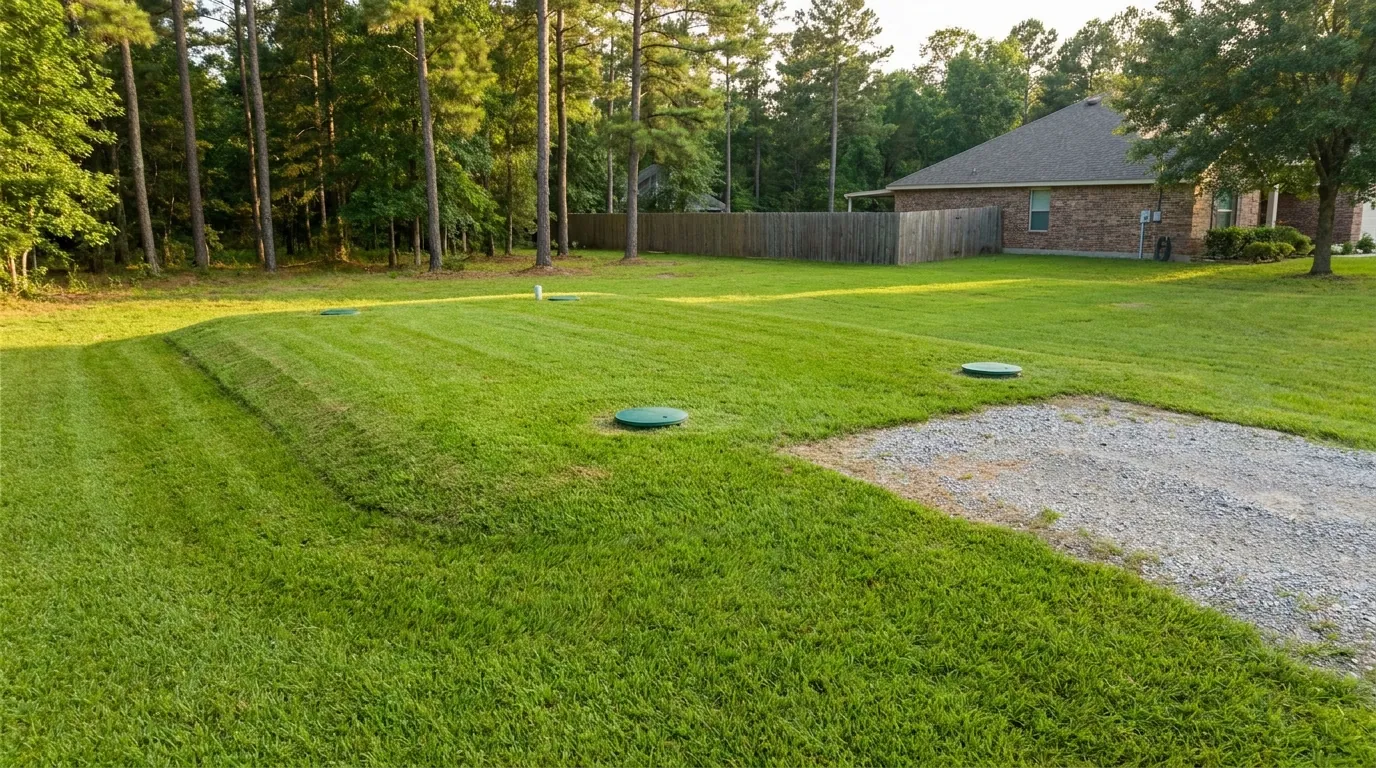
The most vulnerable part of your system
The drain field, or leach field, is where treated water from the tank soaks back into the soil. It is also the part most likely to fail and the most expensive to replace, which is why keeping it healthy matters. The classic warning signs are standing water or spongy ground over the field, bright green strips of grass in an otherwise ordinary lawn, slow drains throughout the house, and sewage odors outdoors. In Conroe, expansive clay makes all of this worse: clay accepts water slowly, so when solids reach the field or the water table rises after a storm, the field saturates and can't keep up.
Much drain field trouble starts in the tank. When solids escape a full or unmaintained tank, they clog the soil pores in the field and choke off its ability to absorb water. That is why the first step is almost always to check and empty the tank. Consistent septic tank pumping is the single best thing you can do to protect the field, and a septic system inspection tells us whether the field is recoverable or already failing.
We service drain fields throughout Conroe and nearby communities, always starting with a diagnosis rather than assuming the worst.
How we approach a struggling field
Drain field problems have several causes, so we work through them in order.
-
Confirm the source
We check the tank first. A full tank or failed baffle sends solids to the field, and fixing that at the source is cheaper than any field work. We rule this out before anything else.
-
Assess saturation
We look at how wet the field is, whether the water table is high after recent Conroe storms, and whether the ground is failing to absorb effluent at a normal rate.
-
Relieve and monitor
Pumping the tank and reducing water use gives a stressed field a chance to recover, especially if the cause was a temporary overload or a wet season.
-
Plan next steps
If the field is genuinely failing, we explain the realistic options in plain terms so you can plan and budget rather than being caught off guard by a backup.
Get your drain field looked at
Wet ground and slow drains rarely fix themselves. The sooner we diagnose the field, the more options you tend to have.
Serving Conroe and surrounding Montgomery County.
Frequently asked questions
Why is the ground over my drain field always wet?
Saturated ground usually means the field can't absorb effluent as fast as it arrives. In Conroe's clay soil this often follows a full tank sending solids to the field, or a high water table after heavy rain. We diagnose which is at play before recommending anything.
Can a drain field recover, or does it always need replacing?
Fields stressed by a temporary overload or a wet season can often recover once the tank is emptied and water use drops. Fields clogged over years by solids from an unmaintained tank are harder to bring back. A diagnosis is what separates the two.
Does pumping the tank help the drain field?
Yes. Keeping the tank pumped stops solids from reaching and clogging the field, which is the most common cause of field failure. Regular pumping is the cheapest insurance for the most expensive part of the system.
How does Conroe's clay soil affect my drain field?
Clay drains slowly, so fields here have less margin than those in sandy soil. After heavy storms the water table can rise and leave the field temporarily unable to absorb, which is why local systems benefit from careful water use during wet weather.