Septic Tank Pumping in Magnolia, TX
Septic pumping and cleaning for Magnolia, TX homes on acreage. How local clay soil and storms affect your septic system.
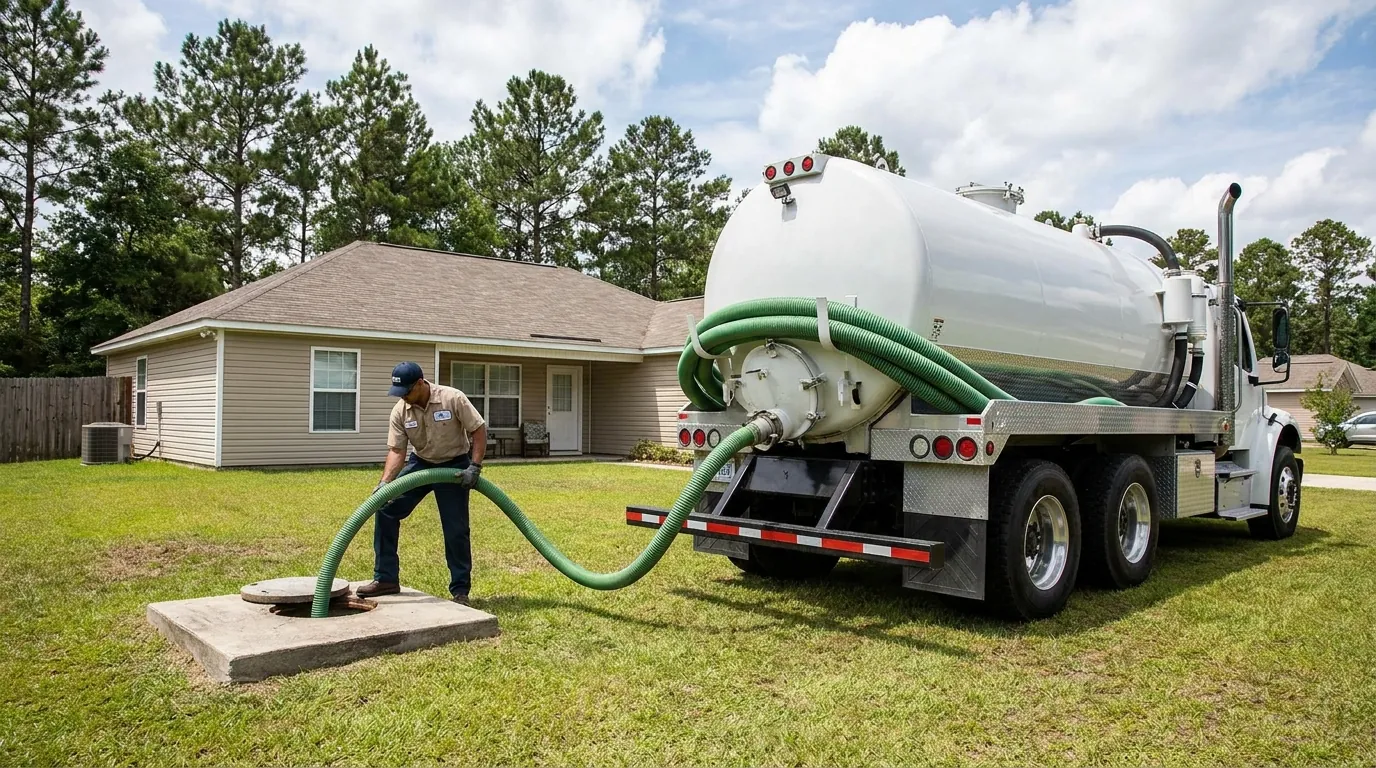
Septic service for the Magnolia area
Magnolia sits southwest of Conroe in fast-growing country where new subdivisions and long-established acreage homes sit side by side. Much of the area is beyond public sewer, so private septic systems handle wastewater for a large share of these households. With new construction spreading across the area, there are plenty of newer systems that still need to be put on a sensible pumping schedule before problems ever appear.
The ground around Magnolia is largely the expansive clay found throughout the region, which swells when wet and drains slowly. A drain field set in that soil sheds water sluggishly, and after the sudden storms this part of Texas gets, it can stay saturated for days. When the field can't take water, the tank fills its working space faster — which is why a consistent septic tank pumping schedule matters more here than in areas with sandy soil.
Larger acreage homes and properties with high water use put more demand on a septic system, and that shortens the interval between pumpings. If you've recently bought in a Magnolia subdivision and aren't sure of your tank's history, a septic system inspection is a smart first step. It confirms the tank's condition and gives you a baseline to plan around.
Serving Magnolia and the southwest county
Call to schedule septic tank pumping, cleaning, or an inspection for your Magnolia property.
New to your home's septic system? Ask for a baseline inspection.
Frequently asked questions
Are Magnolia homes usually on septic?
Many are. Beyond the areas reached by public sewer, a large share of Magnolia-area homes on acreage and in outlying subdivisions run on private septic systems that need regular pumping.
I bought a new-build in Magnolia — when should I pump?
Even a new system benefits from an early baseline check and a planned schedule. Most households pump every three to five years, but water use and the slow-draining clay soil here can shorten that interval.
Why does clay soil matter for my septic?
Clay swells when wet and drains slowly, so a drain field stays saturated longer after storms. A saturated field can't accept effluent, which fills the tank's working space faster and makes regular pumping essential.